
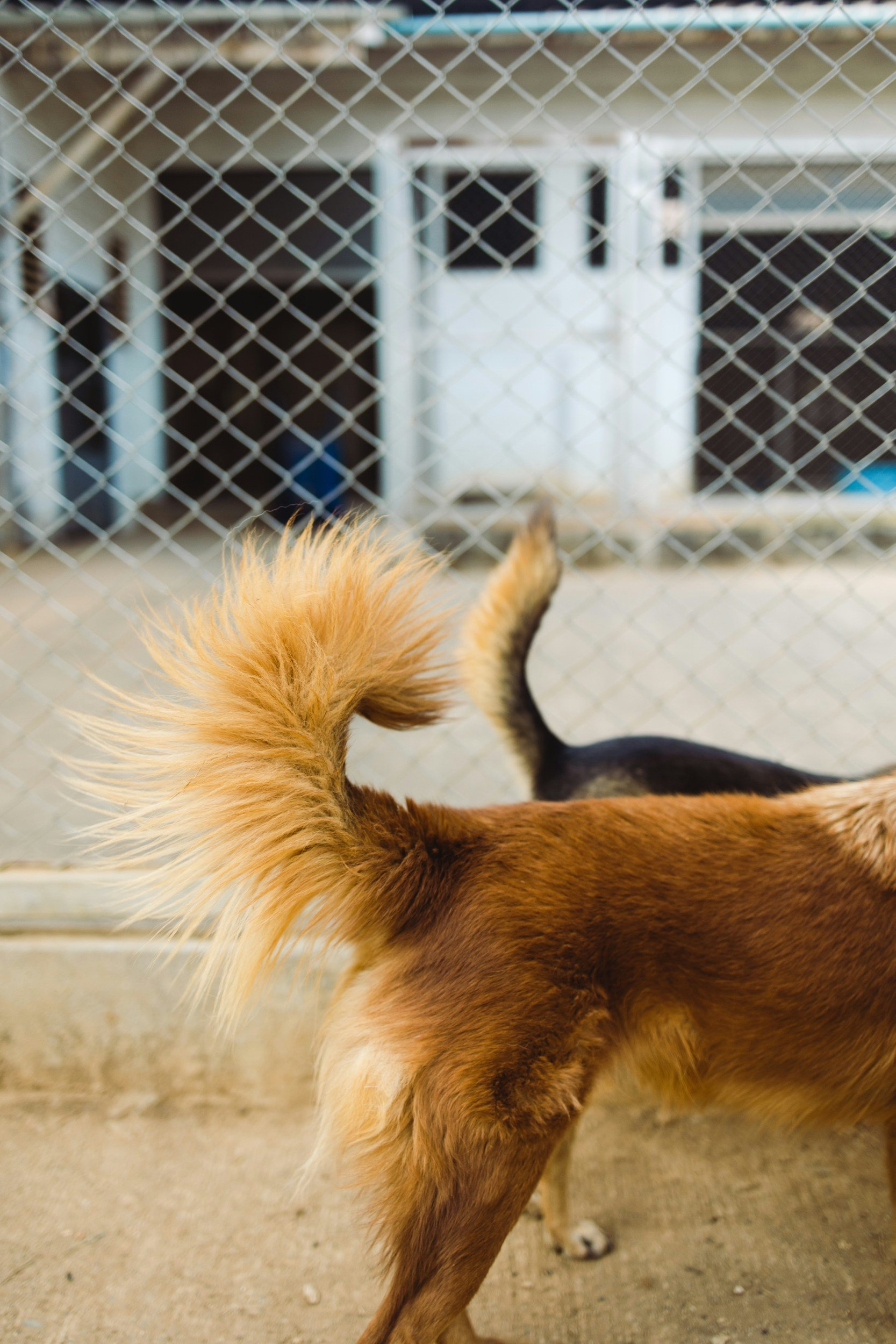
Happy Tail
What is happy tail?
Happy Tail, also known as Happy Tail Syndrome, is a condition that occurs when a dog repeatedly and forcefully wags its tail against hard surfaces such as walls, kennel doors, furniture, fencing, or other objects.
Although tail wagging is a normal way for dogs to express excitement and happiness, repeated impact can cause significant damage to the delicate skin and tissue at the tip of the tail.
The constant striking can cause the hair to rub off, the skin to become irritated, and eventually develop open sores, cuts, or bleeding wounds.
————
Causes:
Happy Tail is caused by repeated trauma to the tail, usually from excessive or forceful wagging against hard surfaces.
Common situations that can contribute to Happy Tail include:
● Excitement when greeting people or other dogs.
● Excessive tail wagging during playtime.
● Repeatedly hitting kennel doors, walls, or fencing.
● Wagging against furniture or other hard objects.
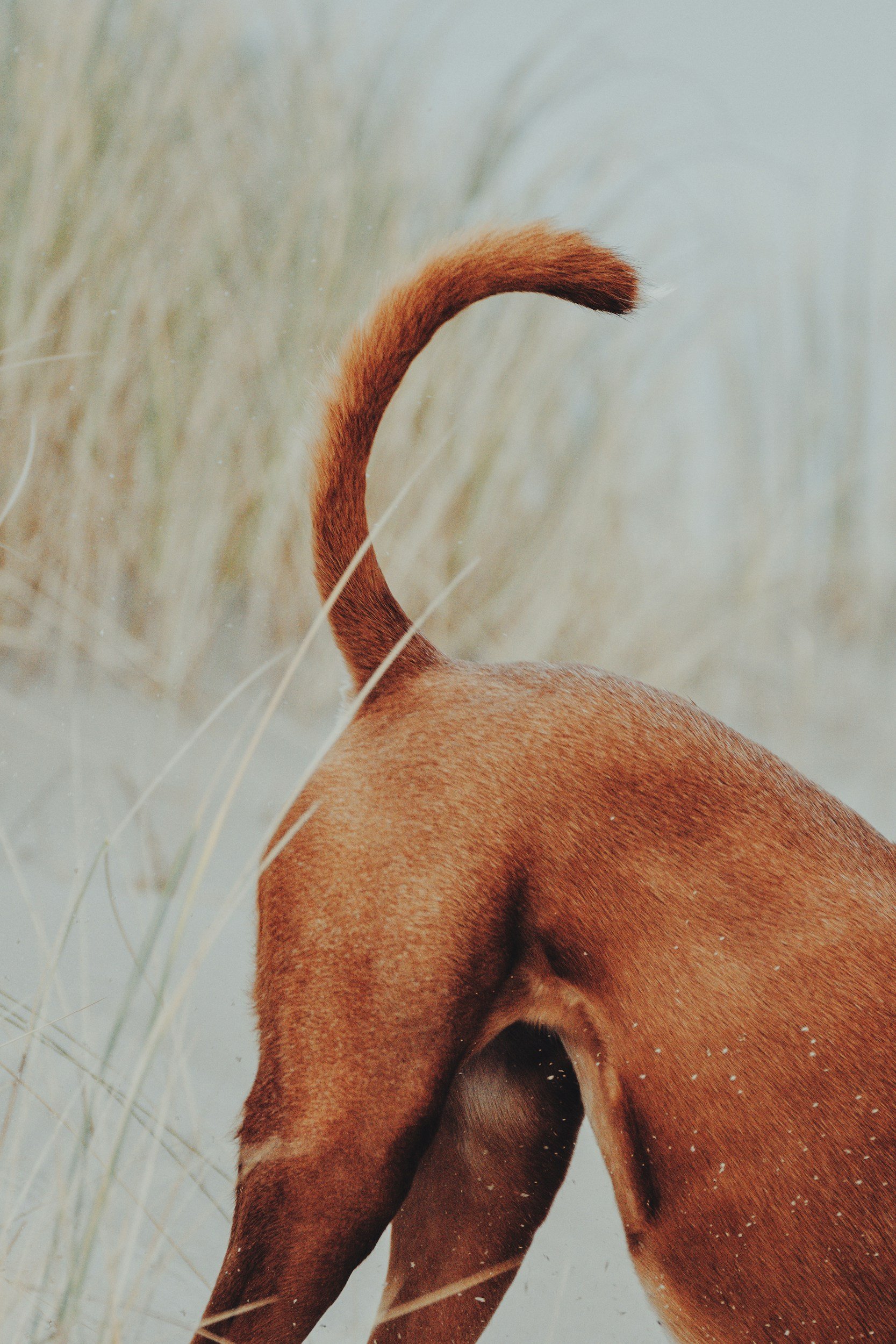
Which Dogs Are More Prone To Happy Tail?
Although ANY DOG CAN DEVELOP HAPPY TAIL, certain physical characteristics may increase the risk.
Dogs with long, slender, powerful tails that wag with considerable force are particularly susceptible.
Breeds commonly associated with Happy Tail include:
● Pit Bulls
● German Shepherds
● Great Danes
● Greyhounds
● Labrador Retrievers
Dogs that are especially enthusiastic tail waggers may be more likely to experience this condition.
Warning Signs & Symptoms
Recognizing the early signs of Happy Tail is important because small injuries can become persistent wounds.
Signs may include:
● Hair loss at the tail tip: Repeated rubbing can cause the hair to wear away.
● Redness and irritation: The skin may appear inflamed or raw.
● Scabbing: Repeated trauma can cause scabs to form and reopen.
● Bleeding: The tail may leave small spots of blood on walls, kennel doors, bedding, or surrounding surfaces.
● Open sores: The skin may break down and develop wounds that do not heal easily.
● Pain or sensitivity: Your dog may become uncomfortable when the tail is touched.
● Repeated reinjury: The same area may continue bleeding or reopening despite attempts to heal.
Why Does Happy Tail Take So Long To Heal?
One of the biggest challenges with Happy Tail is that THE INJURY CAN CONTINUE TO REOPEN EVERY TIME THE DOG WAGS ITS TAIL AGAINST SOMETHING.
Unlike an ordinary scrape that can heal with time and protection, Happy Tail involves an area that is constantly moving and may repeatedly strike hard surfaces.
1. REPEATED TRAUMA Every time the injured tail strikes a hard surface, the healing tissue can become damaged again. Even after a scab begins forming, another forceful wag can reopen the wound and cause additional bleeding.
2. LIMITED PROTECTION The tip of the tail has very little soft tissue covering the underlying structures. This makes it difficult to protect the injured area from repeated impact. Bandaging can help, but tail bandages must be applied correctly because wrapping too tightly can restrict blood circulation.
3. CONTINUED EXCITEMENT Dogs do not always recognize that their tail is injured. They may continue wagging just as enthusiastically as before, even when the movement causes pain or further damage.
4. RISK OF INFECTION An open wound can become contaminated, especially when it repeatedly contacts surfaces or becomes irritated. Persistent wounds may require veterinary cleaning, medication, protective bandaging, and additional treatment.
5. CHRONIC INJURIES When Happy Tail continues to reopen, the injury can become chronic. In severe cases that do not respond to treatment, surgical shortening of the tail may be recommended to prevent continued trauma.
What Should You Do If Your Dog Develops Happy Tail?
If you notice an injury at the tip of your dog's tail:
1. Contact your veterinarian for guidance, especially if the skin is open or bleeding.
2. If bleeding occurs, apply gentle, direct pressure with clean gauze or a clean cloth.
3. Prevent your dog from licking, chewing, or further injuring the area.
4. Avoid attempting to tightly wrap or bandage the tail.
5. Monitor for swelling, discoloration, discharge, or worsening irritation.
If bleeding does not stop, the wound is severe, or the tail becomes swollen or changes color, seek veterinary attention.
A Note From Hoffman Haus Pet Resort
At Hoffman Haus Pet Resort, your dog's health, safety, and well-being are always first priority.
We encourage every pet parent to become familiar with Happy Tail and Scraped Nose injuries and understand the risks, especially if their dog is particularly energetic, an enthusiastic tail wagger, or frequently runs along fencing.
Although we take precautions and monitor our guests during their stay, NO FACILITY CAN GUARANTEE THAT EVERY INJURY OR ACCIDENT WILL BE PREVENTED. At Hoffman Haus Pet Resort, we do everything reasonably possible to keep our guests safe, happy, and comfortable. However, pet owners should understand that they are responsible for any veterinary expenses, medications, or treatments needed for injuries or conditions that occur during their dog's stay, as outlined in our boarding agreement.
If your dog has a history of Happy Tail, recurring tail injuries, excessive fence-running, or previous nose abrasions, please make sure our team is aware of this information before boarding so we can take any additional precautions that may be helpful.
REMEMBER: HAPPY TAIL CAN REPEATEDLY REOPEN FROM FORCEFUL WAGGING, AND SCRAPED NOSES CAN WORSEN FROM CONTINUED FRICTION, RUBBING, OR SCRATCHING.
This information is intended for educational purposes and is not a substitute for veterinary advice, diagnosis, or treatment. Always consult your veterinarian regarding injuries, wound care, and appropriate treatment.
Scraped Nose
What is a scraped nose?
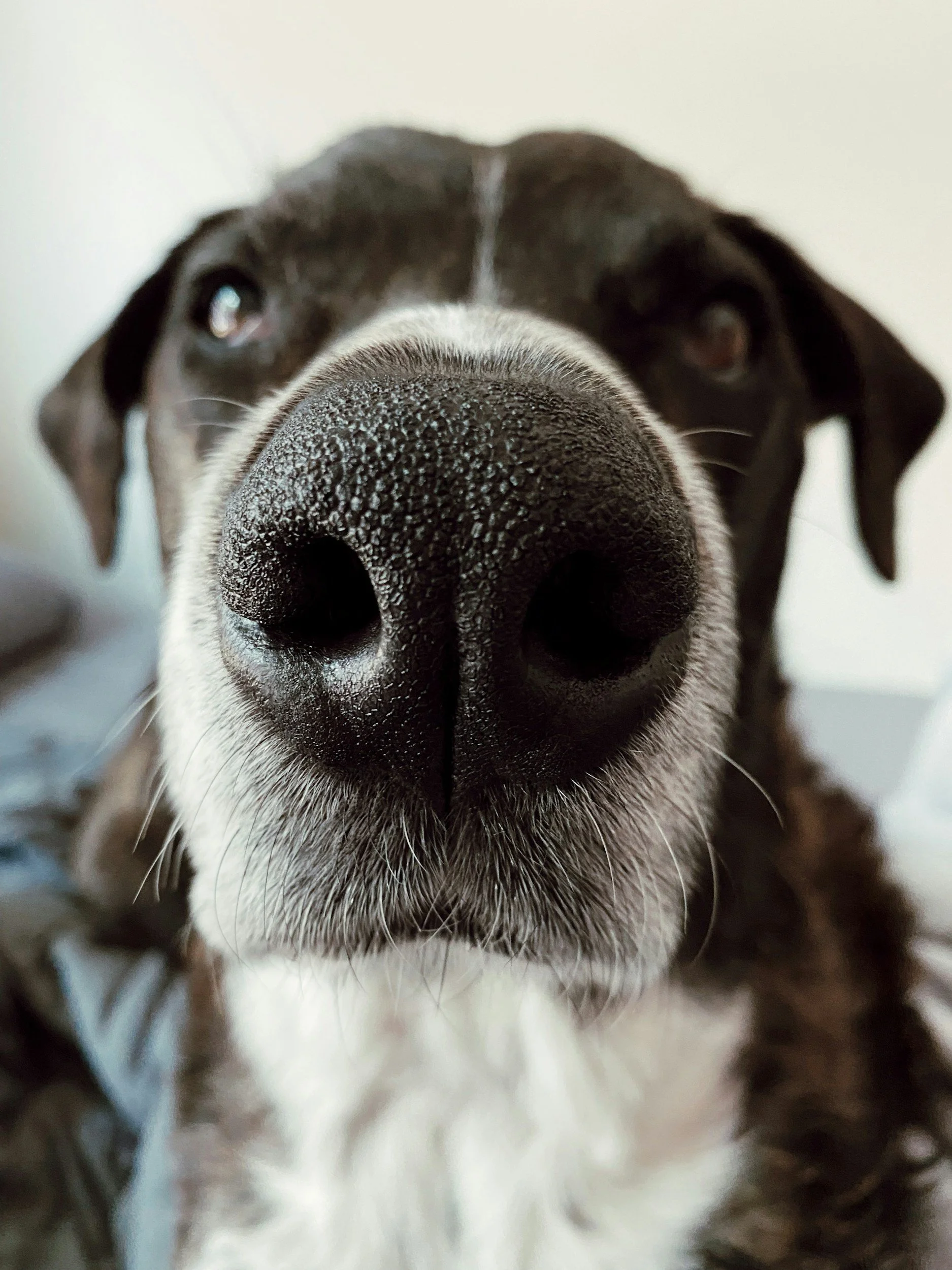
A scraped nose is a superficial skin injury caused by friction or rubbing against a rough or abrasive surface.
At Hoffman Haus Pet Resort, scraped noses are commonly associated with energetic and active dogs that run back and forth along our chain-link fencing or jump up at the fence.
As dogs move their noses against or between the chain links, repeated rubbing can irritate the skin and cause abrasions.
These injuries may appear as small red spots, raw patches, missing hair, or areas where the outer layer of skin has been rubbed away.
MOST SCRAPED NOSES ARE SUPERFICIAL, BUT REPEATED FRICTION CAN MAKE AN INJURY WORSE AND DELAY HEALING.
————
Causes:
Scraped noses are generally caused by repeated friction against a surface.
Common situations that can contribute include:
● Running back and forth along chain-link fencing.
● Jumping up against fencing.
● Repeatedly sniffing or rubbing against rough surfaces.
● Scratching or rubbing an already irritated area.
At our facility, energetic dogs may become so focused on watching activity outside their play area that they repeatedly run along the fence or put their noses against the chain links.
THE MORE FREQUENTLY THE NOSE RUBS AGAINST THE FENCE, THE GREATER THE POSSIBILITY OF IRRITATION OR SKIN DAMAGE.
Which Dogs Are More Prone To Scraped Noses?
ANY DOG CAN DEVELOP A SCRAPED NOSE.
However, dogs that are especially active, curious, energetic, or persistent around fencing may be more likely to experience this type of injury.
Dogs that frequently:
● Run back and forth along fence lines. ● Jump up at chain-link fencing.
● Repeatedly sniff or rub against the same surfaces.
May be more susceptible to developing friction-related abrasions.
Warning Signs & Symptoms
Scraped noses can range from mild irritation to more noticeable skin damage.
Signs may include:
● Redness: The affected area may appear pink or red.
● Hair loss: Repeated rubbing can remove hair from the muzzle.
● Raw skin: The surface may appear irritated or rubbed away.
● Small spots of blood: More noticeable scrapes may bleed slightly.
● Scabbing: A protective crust may develop as the area begins healing.
● Swelling: More significant irritation or injury may cause inflammation.
● Sensitivity: Your dog may pull away or show discomfort when the area is touched.
● Repeated scratching: Your dog may rub or scratch the affected area because of irritation or itching.
How Can A Scraped Nose Become Worse?
Although many scraped noses are minor, continued rubbing and scratching can prevent the skin from healing properly.
1. REPEATED FRICTION If a dog continues rubbing its nose against the fence, the injured skin can become irritated again. This may cause the scrape to become larger or deeper.
2. SCRATCHING AND ITCHING As the injured area begins healing, scabbing and irritation may cause itching. Dogs may rub their faces against the ground, bedding, furniture, or other surfaces. Unfortunately, this can remove the forming scab and reopen the injury.
3. DELAYED HEALING Every time the injured skin is rubbed or scratched, the healing process may be interrupted. Repeated irritation can cause a minor abrasion to remain present longer than expected.
4. RISK OF INFECTION Open or damaged skin can allow bacteria to enter the affected area. Signs of possible infection include increasing redness, swelling, warmth, discharge, an unpleasant odor, or worsening discomfort.
5. MORE SERIOUS SKIN DAMAGE If the scrape is deep, repeatedly traumatized, or not healing, veterinary evaluation may be necessary to determine whether additional treatment is needed.
What Should You Do If Your Dog Develops A Scraped Nose?
If you notice a scrape or irritated area on your dog's nose or muzzle:
1. Gently clean minor surface abrasions with clean water or sterile saline.
2. Avoid scrubbing or picking at scabs.
3. Discourage excessive scratching and rubbing. 4. Prevent your dog from continuing to irritate the affected area.
5. Monitor the scrape for changes in appearance, swelling, discharge, or worsening redness.
IMPORTANT: DO NOT USE HYDROGEN PEROXIDE, RUBBING ALCOHOL, OR UNAPPROVED CLEANING PRODUCTS ON OPEN WOUNDS. These products can damage healing tissue and delay recovery.
When Should You Contact Your Veterinarian?
A veterinary visit may be necessary if:
● The scrape is deep or extensive.
● Bleeding continues or repeatedly returns.
● The affected area becomes increasingly swollen or red.
● You notice pus, discharge, or an unpleasant odor.
WHAT STARTS AS A SMALL SCRAPE CAN BECOME A LARGER PROBLEM IF THE AREA IS CONTINUOUSLY REINJURED.
A Note From Hoffman Haus Pet Resort
At Hoffman Haus Pet Resort, your dog's health, safety, and well-being are always first priority.
We encourage every pet parent to become familiar with Happy Tail and Scraped Nose injuries and understand the risks, especially if their dog is particularly energetic, an enthusiastic tail wagger, or frequently runs along fencing.
Although we take precautions and monitor our guests during their stay, NO FACILITY CAN GUARANTEE THAT EVERY INJURY OR ACCIDENT WILL BE PREVENTED. At Hoffman Haus Pet Resort, we do everything reasonably possible to keep our guests safe, happy, and comfortable. However, pet owners should understand that they are responsible for any veterinary expenses, medications, or treatments needed for injuries or conditions that occur during their dog's stay, as outlined in our boarding agreement.
If your dog has a history of Happy Tail, recurring tail injuries, excessive fence-running, or previous nose abrasions, please make sure our team is aware of this information before boarding so we can take any additional precautions that may be helpful.
REMEMBER: HAPPY TAIL CAN REPEATEDLY REOPEN FROM FORCEFUL WAGGING, AND SCRAPED NOSES CAN WORSEN FROM CONTINUED FRICTION, RUBBING, OR SCRATCHING.
This information is intended for educational purposes and is not a substitute for veterinary advice, diagnosis, or treatment. Always consult your veterinarian regarding injuries, wound care, and appropriate treatment.